

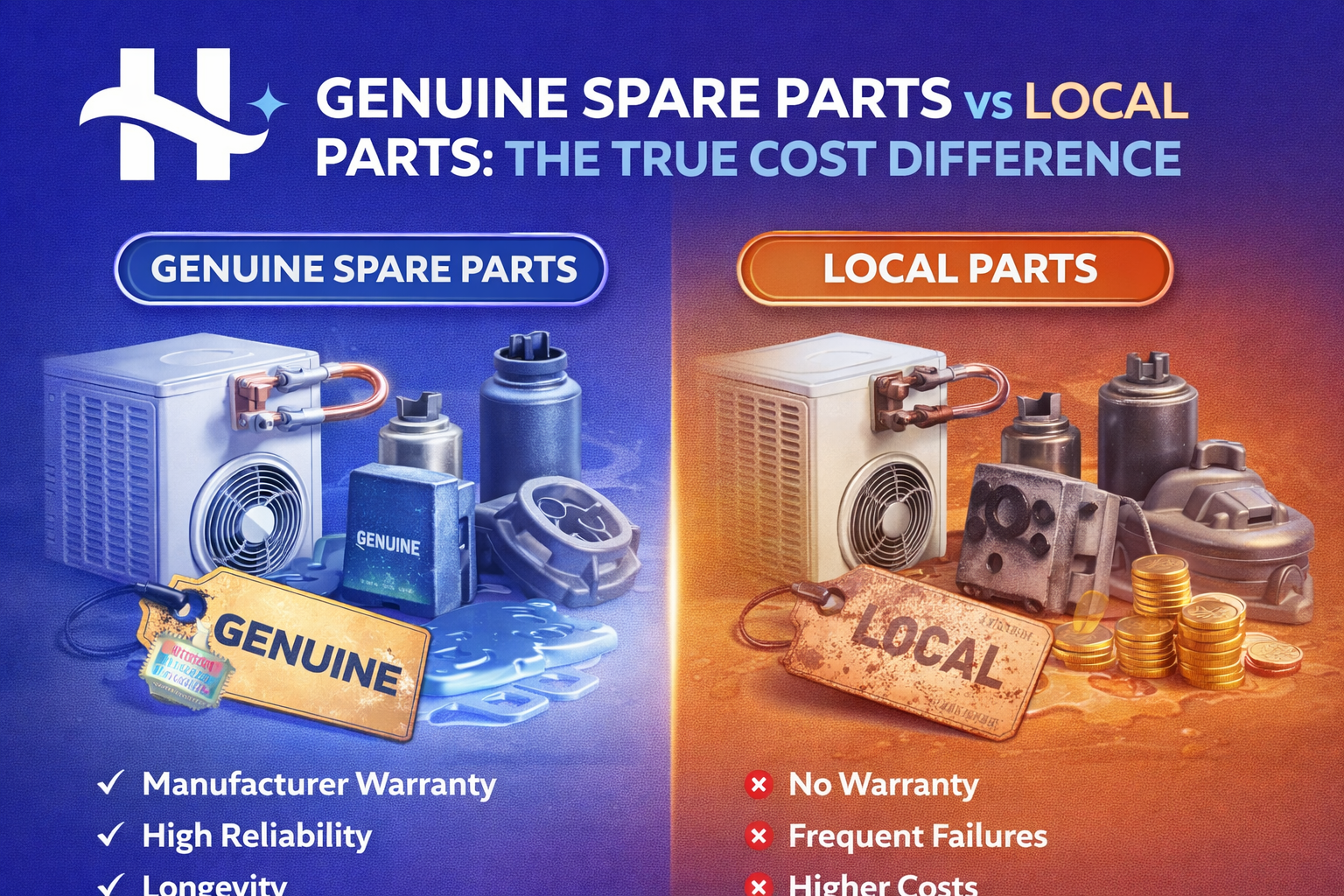
When your air conditioner requires repairs or part replacements, one of the most common dilemmas is choosing between genuine (OEM) spare parts and local (aftermarket) parts. At first glance, local parts may seem like a cost-effective option, but the long-term impact on performance, efficiency, and system lifespan often tells a different story.
For homeowners and businesses alike—especially in high-usage regions like Gujarat—this decision directly affects not only repair costs but also energy consumption, reliability, and overall AC health. In this blog, we break down the real cost difference between genuine and local spare parts so you can make a well-informed decision.
Understanding the Difference
What Are Genuine Spare Parts?
Genuine spare parts are components manufactured or approved by the original AC brand. These parts are designed specifically for your system model, ensuring precise compatibility, optimal performance, and adherence to manufacturer standards.
What Are Local (Aftermarket) Parts?
Local parts are produced by third-party manufacturers and are not officially approved by the AC brand. While they are widely available and cheaper, their quality, durability, and compatibility can vary significantly.
The Real Cost Comparison: Beyond Just Price
1. Initial Cost vs Long-Term Investment
Local parts are typically 30–50% cheaper than genuine parts, making them attractive for quick fixes. However, genuine parts act as a long-term investment by reducing the need for frequent replacements and repairs.
Reality Check:
Saving money upfront with local parts often leads to higher cumulative costs over time.
2. Performance & Cooling Efficiency
Genuine parts are engineered to match your AC system perfectly, ensuring smooth operation and consistent cooling. Local parts may not fit or function with the same precision, leading to reduced efficiency.
Impact:
- Uneven cooling
- Longer cooling cycles
- Increased strain on the system
3. Energy Consumption
An AC with genuine parts operates at optimal efficiency, consuming less electricity. In contrast, local parts can disrupt system balance, causing the unit to work harder and consume more power.
Result:
Higher monthly electricity bills—especially noticeable in commercial spaces or heavy usage environments.
4. Durability & Lifespan
Genuine spare parts undergo strict quality testing and are built to last. Local parts may wear out faster due to lower material quality and manufacturing standards.
Outcome:
- Frequent breakdowns
- Shorter component lifespan
- Increased maintenance frequency
5. Risk of Damage to Other Components
Using incompatible or low-quality parts can affect other components in your AC system. For example, a non-standard compressor or fan motor can put extra stress on connected parts.
Hidden Cost:
A small saving today can lead to major repair expenses later.
6. Warranty & Service Support
Most AC manufacturers only honor warranties when genuine parts are used. Installing local parts can void your warranty, leaving you unprotected against future issues.
Important Note:
Always check warranty terms before opting for cheaper alternatives.
When Are Local Parts Considered?
There are limited scenarios where local parts may be considered:
- Older AC units where genuine parts are no longer available
- Temporary or emergency fixes
- Budget constraints for non-critical components
However, even in these cases, quality should not be compromised completely.
Expert Insights: What Professionals Recommend
HVAC professionals generally recommend using genuine spare parts for critical components such as:
- Compressors
- PCB boards
- Motors and fans
- Refrigerant-related components
For minor parts, decisions can be flexible—but only after expert consultation.
Hidden Costs Businesses Often Overlook
For commercial setups, the impact of using local parts goes beyond repair costs:
- Increased downtime affecting operations
- Poor cooling impacting employee productivity
- Negative customer experience in retail or hospitality spaces
- Higher long-term operational expenses
In such cases, genuine parts offer better reliability and ROI.
How to Identify Genuine Spare Parts
- Check for brand labeling and packaging
- Verify part numbers with the manufacturer
- Purchase from authorized dealers or service providers
- Ask for proper billing and warranty documentation
When to Call a Professional
Choosing the right spare part isn’t just about price—it requires technical understanding of your AC system. Always consult a certified technician who can recommend the most suitable option based on your unit and usage.
Conclusion
While local spare parts may appear economical initially, they often come with hidden costs in terms of efficiency, durability, and system reliability. Genuine spare parts, on the other hand, ensure optimal performance, lower energy consumption, and long-term savings.
For both residential and commercial users, especially in high-demand climates, investing in genuine parts is a smarter and more sustainable choice.
FAQs
1. Are genuine AC spare parts worth the higher cost?
Yes, they provide better performance, durability, and long-term savings.
2. Can local parts damage my AC?
In some cases, yes. Poor-quality or incompatible parts can affect other components.
3. Do genuine parts reduce electricity consumption?
Yes, they help maintain system efficiency, which lowers energy usage.
4. Is warranty affected by using local parts?
Yes, using non-approved parts can void the manufacturer’s warranty.
5. Where can I buy genuine AC spare parts?
From authorized dealers, service centers, or certified HVAC professionals.