

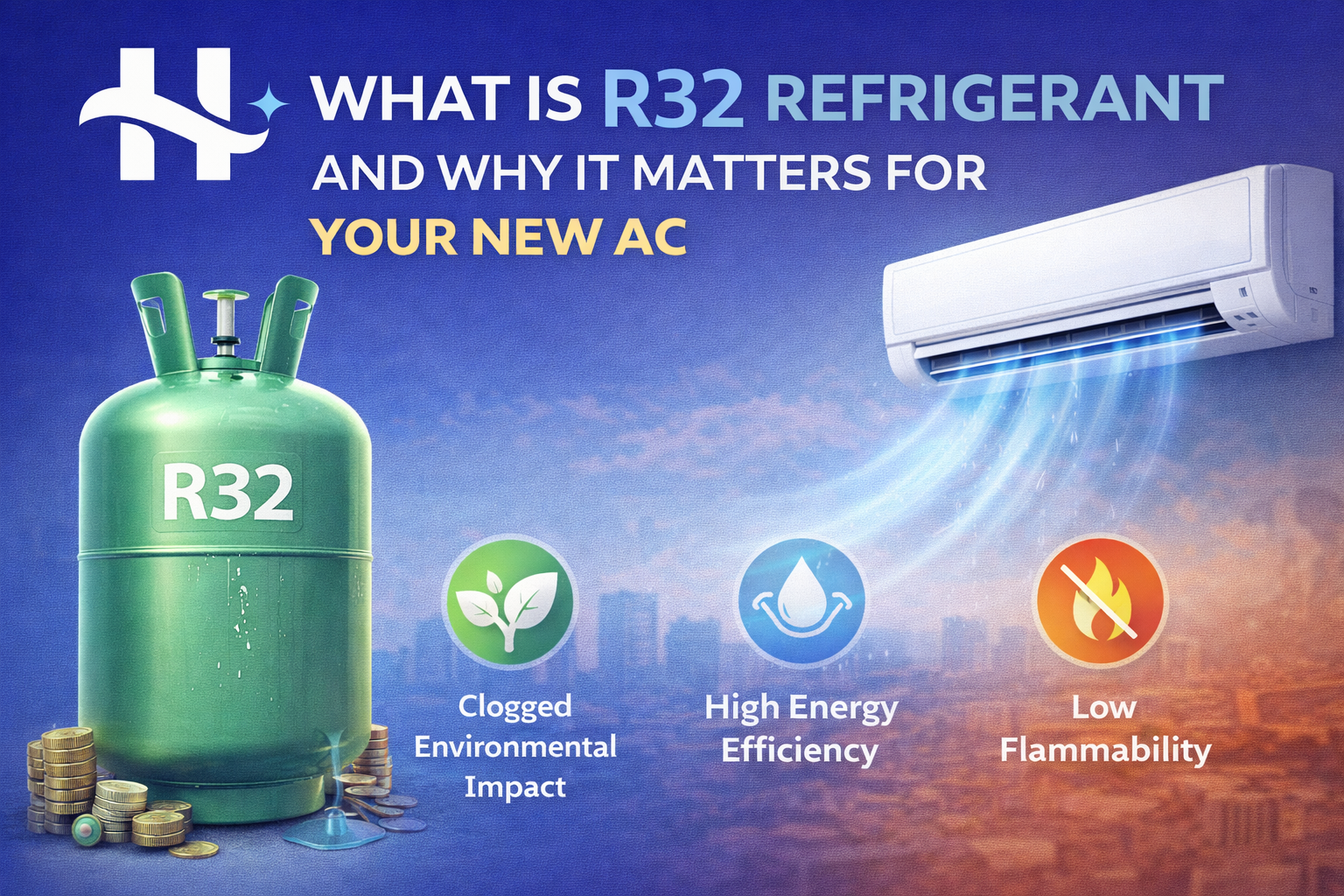
If you’re planning to buy a new air conditioner, you’ve probably come across the term R32 refrigerant. While most buyers focus on tonnage, brand, and price, the type of refrigerant used in an AC is equally important. It directly impacts cooling efficiency, environmental safety, and long-term operating costs.
With growing awareness around energy efficiency and eco-friendly solutions, R32 has emerged as a preferred choice in modern air conditioning systems. But what exactly is R32, and why should it matter to you? Let’s break it down.
What Is R32 Refrigerant?
R32 (Difluoromethane) is a next-generation refrigerant used in air conditioners for heat transfer. It absorbs heat from indoor air and releases it outside, enabling the cooling process.
It is increasingly replacing older refrigerants like R22 and R410A due to its improved efficiency and lower environmental impact.
Why R32 Refrigerant Matters
1. Higher Energy Efficiency
R32 has better heat transfer properties compared to older refrigerants. This means your AC can cool faster while consuming less electricity.
Benefit:
Lower power bills and improved cooling performance—especially important in hot regions.
2. Lower Environmental Impact
One of the biggest advantages of R32 is its lower Global Warming Potential (GWP) compared to R410A. It has zero ozone depletion potential, making it a more eco-friendly option.
Why It Matters:
As environmental regulations become stricter, choosing R32 helps you stay future-ready.
3. Faster Cooling Performance
ACs using R32 refrigerant can achieve desired temperatures more quickly due to efficient heat exchange.
Result:
Better comfort in less time, even during extreme summer conditions.
4. Reduced Refrigerant Quantity Required
R32 systems require less refrigerant volume to operate efficiently compared to older gases.
Impact:
- Lower overall system load
- Improved efficiency
- Reduced environmental footprint
5. Easier to Recycle and Handle
R32 is a single-component refrigerant, unlike R410A which is a blend. This makes it easier to recycle, reuse, and service.
R32 vs Older Refrigerants
| Feature | R22 | R410A | R32 |
| Ozone Impact | High | None | None |
| GWP | High | Medium | Low |
| Efficiency | Moderate | Good | High |
| Environmental Safety | Poor | Better | Best |
Are There Any Concerns with R32?
R32 is mildly flammable (classified as A2L), which raises safety concerns for some users. However, modern AC systems are designed with strict safety standards, making it safe for residential and commercial use when installed correctly.
Expert Tips Before Buying an R32 AC
- Always choose a reputed brand with proper safety certifications
- Ensure installation is done by trained professionals
- Check for energy ratings (prefer 4-star or 5-star models)
- Combine with regular servicing for maximum efficiency
When to Consult a Professional
If you’re upgrading your AC or unsure whether R32 is suitable for your space, consult an HVAC expert. They can guide you based on your usage, room size, and long-term requirements.
Conclusion
R32 refrigerant represents the future of air conditioning—offering better efficiency, lower environmental impact, and improved performance. As technology advances and regulations evolve, choosing an AC with R32 is not just a smart decision but a responsible one.
If you’re investing in a new AC, considering the refrigerant type can make a significant difference in both performance and sustainability.
FAQs
1. Is R32 better than R410A?
Yes, R32 is more energy-efficient and has a lower environmental impact compared to R410A.
2. Is R32 refrigerant safe?
Yes, it is safe when used in properly designed and installed AC systems.
3. Does R32 reduce electricity bills?
Yes, due to higher efficiency, it can help lower power consumption.
4. Can R32 AC be used in homes and offices?
Yes, it is suitable for both residential and commercial applications.
5. Is R32 the future of air conditioning?
Yes, it is widely adopted as a more sustainable and efficient refrigerant option.