

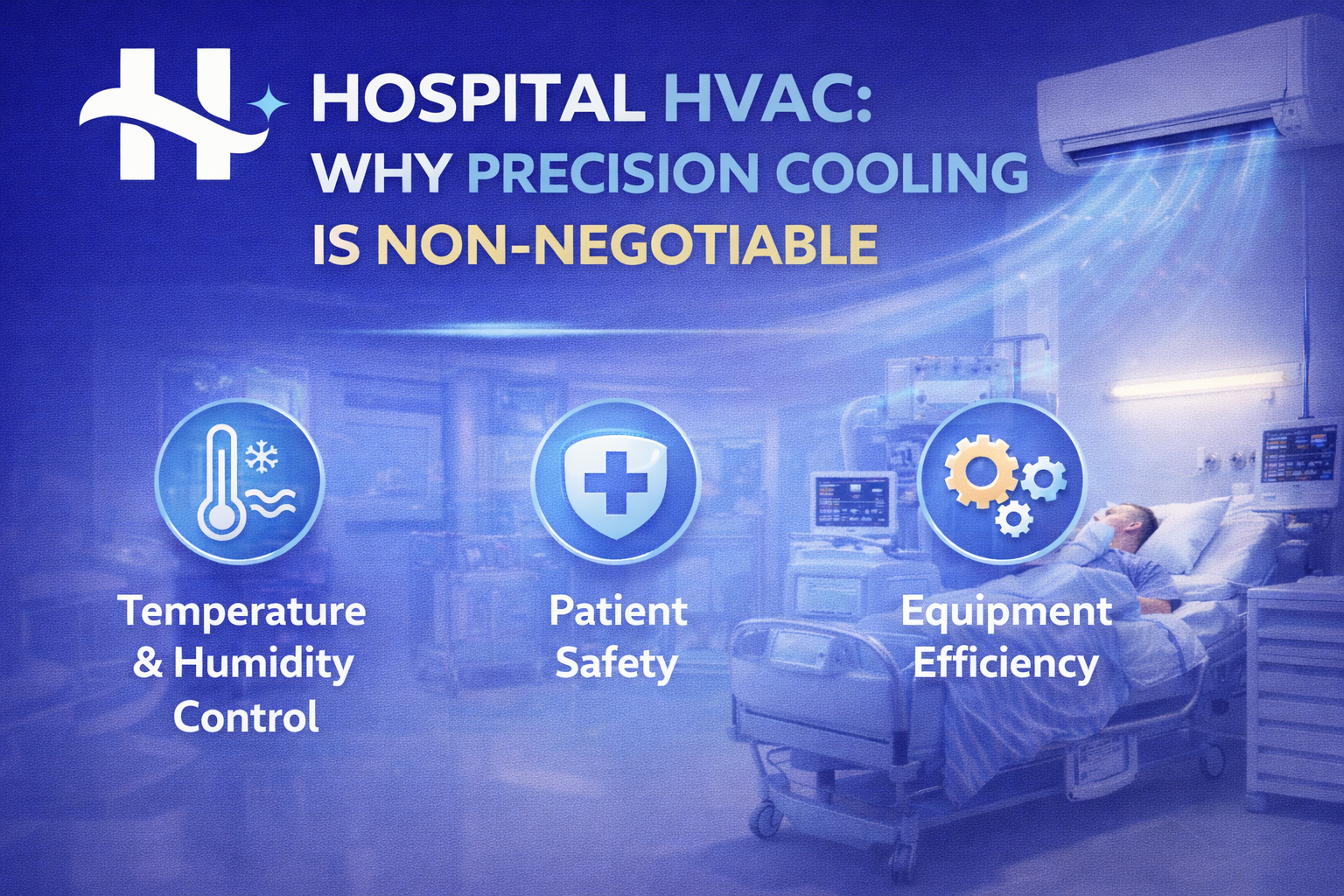
In healthcare environments, air conditioning is not just about comfort—it is a critical component of patient care, infection control, and operational safety. Hospitals rely on highly specialized HVAC (Heating, Ventilation, and Air Conditioning) systems to maintain precise temperature, humidity, and air quality levels across different zones.
Unlike residential or standard commercial setups, hospital HVAC systems must meet strict regulatory standards and operate continuously without failure. Even minor fluctuations can impact patient outcomes, equipment performance, and overall hygiene. This is why precision cooling in hospitals is not optional—it is absolutely non-negotiable.
What Makes Hospital HVAC Different?
Hospital HVAC systems are far more complex than traditional air conditioning systems. They are designed to control not just temperature, but also airflow direction, filtration, humidity, and pressure levels across various departments.
Key characteristics include:
- Zonal control for different areas like ICUs, operation theatres, wards, and labs
- High-efficiency filtration systems (HEPA filters)
- Positive and negative pressure rooms for infection control
- 24/7 continuous operation with backup systems
Each of these elements plays a vital role in maintaining a safe and sterile healthcare environment.
Why Precision Cooling Is Critical in Hospitals
1. Infection Control & Air Quality
Hospitals must maintain strict indoor air quality standards to prevent the spread of airborne infections. Precision HVAC systems ensure controlled airflow and filtration, reducing contaminants, bacteria, and viruses in critical areas.
Example:
Operation theatres use positive pressure to keep contaminated air out, while isolation rooms use negative pressure to contain infections.
2. Patient Safety and Recovery
Temperature and humidity directly affect patient comfort and recovery. Patients in ICUs or recovery rooms require stable environmental conditions to avoid complications.
Impact:
- Faster recovery rates
- Reduced stress on patients
- Better overall healthcare outcomes
3. Protection of Sensitive Medical Equipment
Modern hospitals use advanced diagnostic and life-saving equipment that requires controlled environmental conditions. Fluctuations in temperature or humidity can damage sensitive machines or affect their accuracy.
4. Regulatory Compliance
Healthcare facilities must comply with strict HVAC standards set by authorities. Failure to maintain proper conditions can result in penalties, operational shutdowns, or legal consequences.
5. Continuous Operation Without Failure
Unlike offices or homes, hospital HVAC systems cannot afford downtime. Any failure can disrupt critical procedures, compromise sterile environments, and put lives at risk.
Key Components of Hospital HVAC Systems
1. Air Handling Units (AHUs)
AHUs regulate and circulate air, ensuring proper filtration, temperature control, and airflow distribution.
2. Chiller Systems
Chillers provide centralized cooling for large hospital buildings, ensuring consistent temperature control across multiple zones.
3. HEPA Filtration Systems
These filters remove up to 99.97% of airborne particles, ensuring sterile conditions in critical areas.
4. Ventilation & Airflow Control
Proper ventilation ensures fresh air circulation while maintaining pressure differences between rooms.
5. Building Management Systems (BMS)
Advanced hospitals use BMS to monitor and control HVAC systems in real-time, ensuring precision and efficiency.
Challenges in Hospital HVAC Management
- Maintaining consistent conditions across multiple zones
- High energy consumption due to continuous operation
- Complex maintenance requirements
- Risk of contamination if systems are not properly serviced
- Need for highly skilled technicians
Expert Best Practices for Hospital HVAC
- Regular Preventive Maintenance: Frequent inspections to ensure all components function properly
- Use of High-Quality Components: Always opt for genuine parts to maintain reliability
- Real-Time Monitoring: Implement smart systems for continuous tracking of temperature and air quality
- Energy Optimization: Use efficient chillers and systems to reduce operational costs
- Trained HVAC Professionals: Only certified experts should handle hospital HVAC systems
When to Upgrade or Consult Experts
Hospitals should consult HVAC specialists when:
- Expanding or renovating facilities
- Facing frequent system failures
- Unable to maintain required air quality standards
- Looking to improve energy efficiency
Professional assessment ensures that the HVAC system meets both operational and regulatory requirements.
Conclusion
In hospitals, HVAC systems are a backbone of safe and effective healthcare delivery. Precision cooling ensures infection control, patient safety, equipment reliability, and regulatory compliance.
Investing in advanced HVAC systems and regular maintenance is not just a technical decision—it is a critical responsibility. In a setting where every second and every condition matters, precision cooling truly becomes non-negotiable.
FAQs
1. Why is HVAC important in hospitals?
It ensures proper air quality, temperature control, and infection prevention, which are critical for patient safety.
2. What is precision cooling in healthcare?
It refers to maintaining exact temperature, humidity, and airflow conditions required in different hospital zones.
3. What are positive and negative pressure rooms?
Positive pressure keeps contaminants out, while negative pressure prevents contaminated air from spreading.
4. How often should hospital HVAC systems be serviced?
They require frequent and scheduled maintenance, often monthly or quarterly depending on usage.
5. Can HVAC failure impact patient care?
Yes, even minor failures can compromise sterile conditions and affect patient safety.