

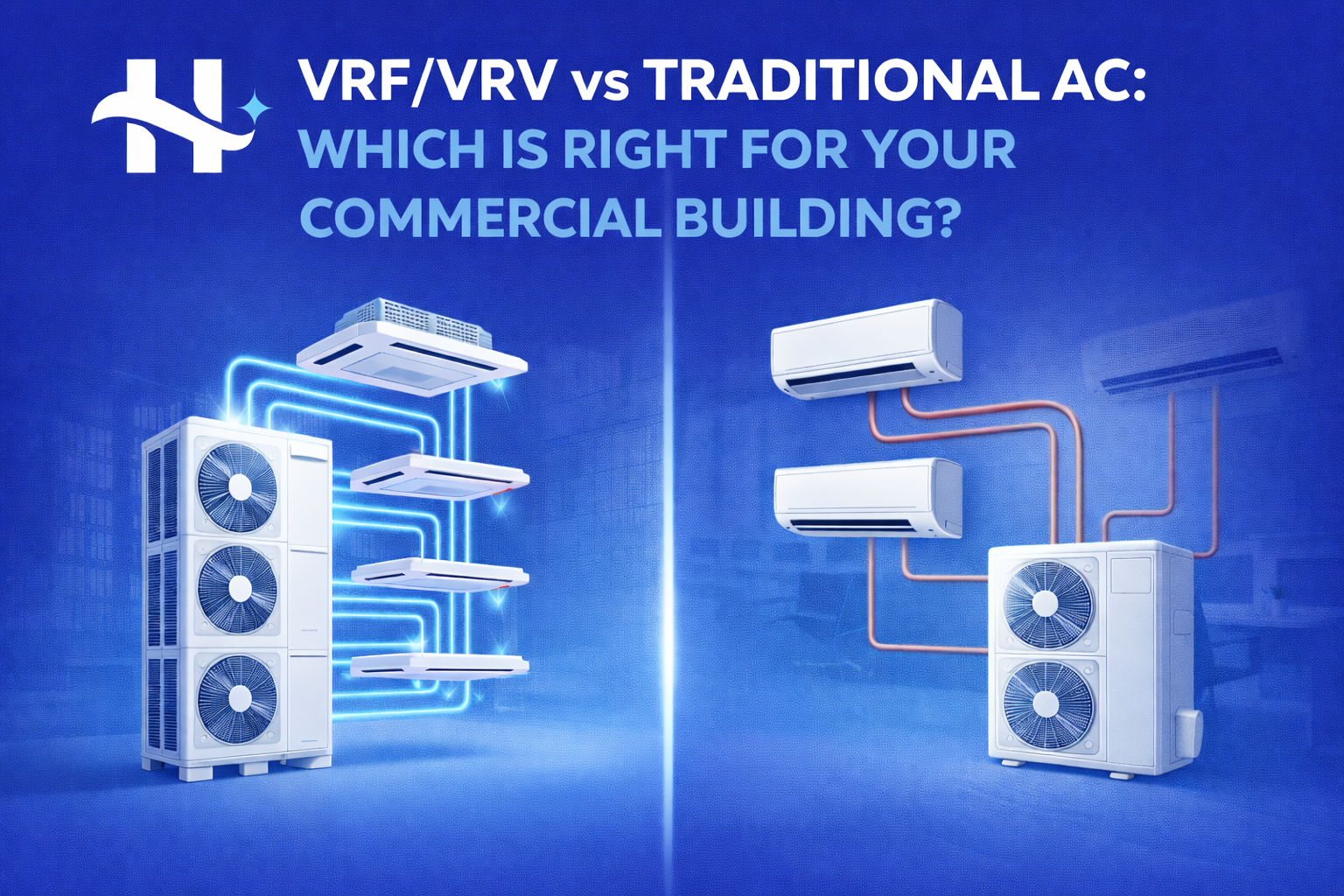
Choosing the right air conditioning system for a commercial building is a critical decision that impacts energy efficiency, operational costs, and overall comfort. With evolving technology, businesses now have advanced options like VRF (Variable Refrigerant Flow) / VRV (Variable Refrigerant Volume) systems alongside traditional air conditioning systems.
Understanding the differences between these systems can help you make an informed investment that aligns with your building size, usage, and long-term goals.
Understanding the Two Systems
What is a Traditional AC System?
Traditional AC systems typically include split ACs, window units, or centralized ducted systems. These systems operate with a fixed capacity—either fully on or off—making them simpler but sometimes less efficient for large or variable cooling demands.
What is VRF/VRV System?
VRF/VRV systems are advanced HVAC solutions that adjust refrigerant flow based on the specific cooling requirements of different zones within a building. This allows multiple indoor units to operate independently while connected to a single outdoor unit.
Key Differences Between VRF/VRV and Traditional AC
1. Energy Efficiency
VRF/VRV systems are highly energy-efficient because they adjust cooling output based on real-time demand. Traditional AC systems often consume more power due to fixed operation cycles.
2. Zoning & Flexibility
VRF/VRV allows precise temperature control for different rooms or zones, making it ideal for offices, hotels, and large commercial spaces. Traditional systems offer limited zoning capabilities.
3. Installation Complexity
Traditional AC systems are easier and quicker to install. In contrast, VRF/VRV systems require detailed planning, professional design, and higher initial setup time.
4. Initial Investment
VRF/VRV systems have a higher upfront cost compared to traditional AC units. However, they often provide better ROI through energy savings and reduced maintenance costs.
5. Maintenance & Lifespan
VRF/VRV systems are designed for long-term performance with fewer breakdowns when properly maintained. Traditional systems may require more frequent servicing, especially in commercial usage.
Which System is Right for Your Commercial Building?
- Choose Traditional AC if:
- You have a small office or retail space
- Your budget is limited
- Cooling requirements are simple and uniform
- Choose VRF/VRV if:
- You manage a large commercial building, hotel, or multi-floor office
- You need different temperatures in different zones
- You want long-term energy savings and advanced control
Expert Tips Before Installation
- Conduct a proper load calculation before selecting any system
- Always work with experienced HVAC professionals for system design
- Consider future expansion needs of your business
- Evaluate long-term operational costs, not just initial investment
When to Consult a Professional
If you are unsure which system suits your building, it’s best to consult an HVAC expert. A professional assessment will consider factors like building size, occupancy, insulation, and usage patterns to recommend the most efficient solution.
Conclusion
Both VRF/VRV and traditional AC systems have their own advantages. The right choice depends on your commercial requirements, budget, and long-term vision. While traditional systems are cost-effective for smaller setups, VRF/VRV systems offer superior efficiency, flexibility, and scalability for larger commercial environments.
Making the right decision today can significantly impact your operational efficiency and energy savings in the future.
FAQs
1. Is VRF/VRV better than traditional AC?
It depends on your needs. VRF/VRV is better for large, complex spaces, while traditional AC works well for smaller areas.
2. Are VRF/VRV systems expensive?
Yes, the initial cost is higher, but they offer long-term savings through energy efficiency.
3. Can VRF/VRV systems be used in small offices?
They can be, but they are generally more suitable for medium to large commercial spaces.
4. How long do VRF/VRV systems last?
With proper maintenance, they typically last longer than traditional AC systems.
5. Do VRF/VRV systems require special maintenance?
Yes, they require skilled technicians for servicing due to their advanced technology.